
Quick Facts
| Manufacture Date | 1900’s / Ironton, Ohio |
|---|---|
| Manufacturer | Ironton Punch and Shear |
Description
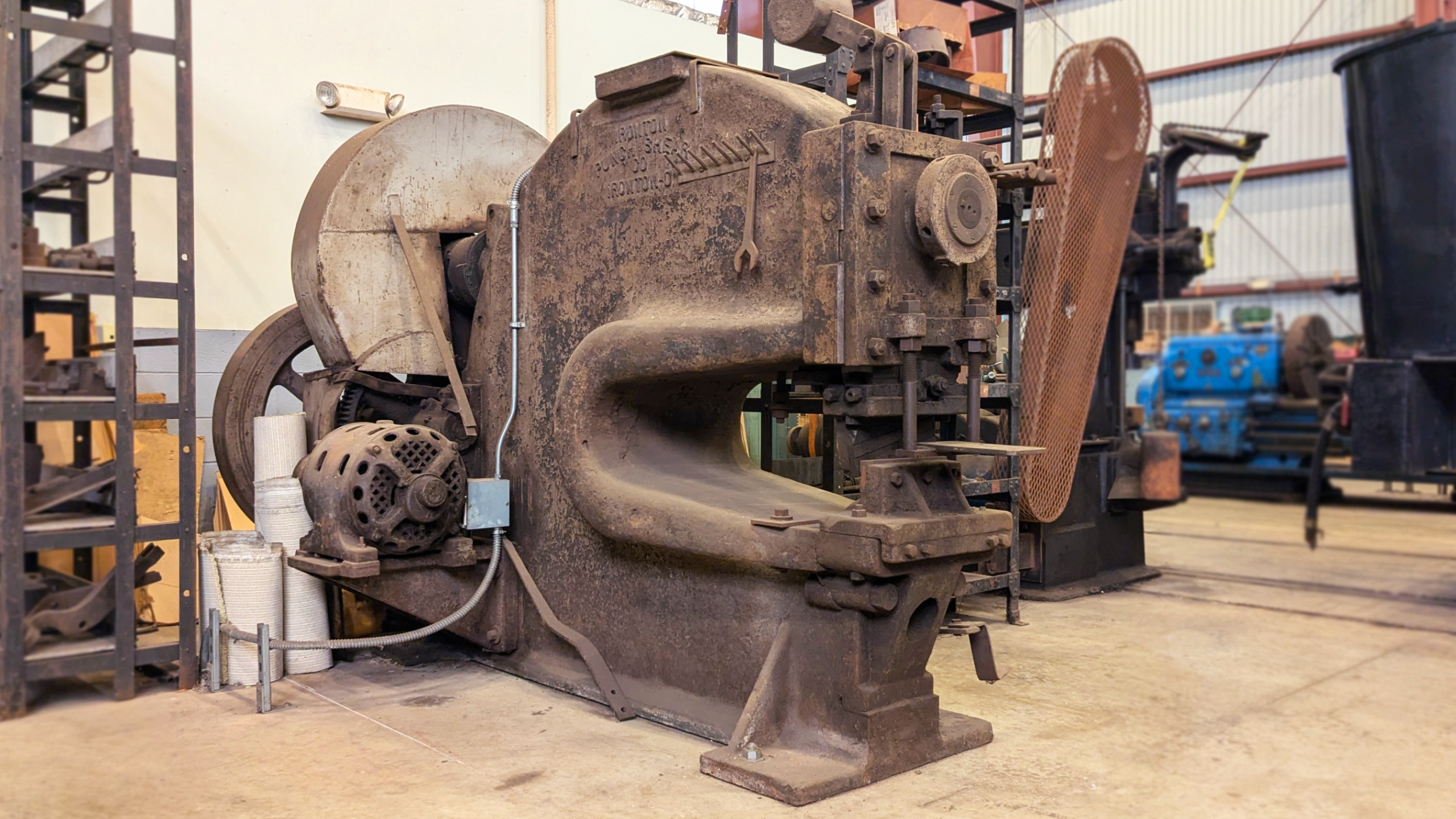
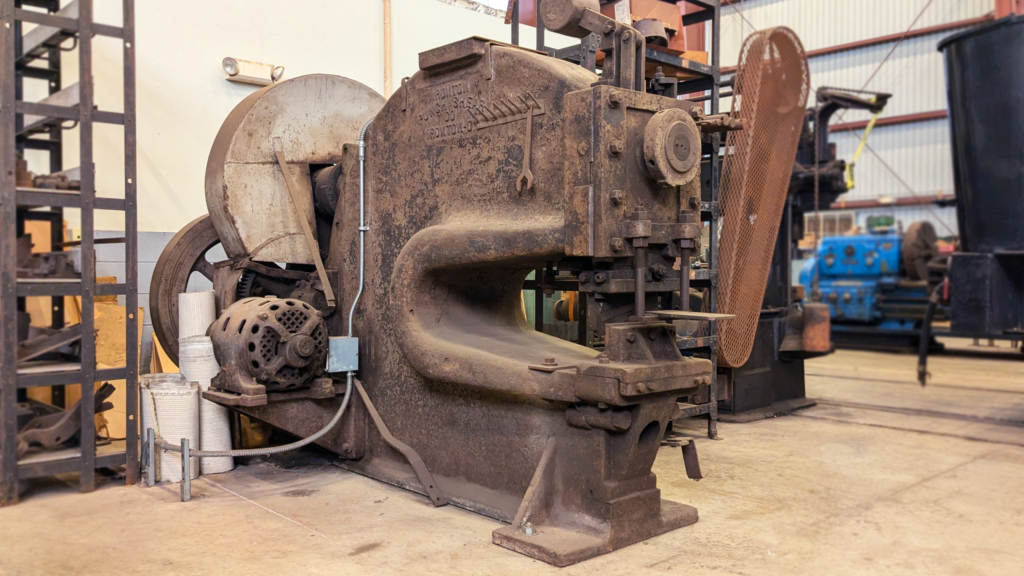
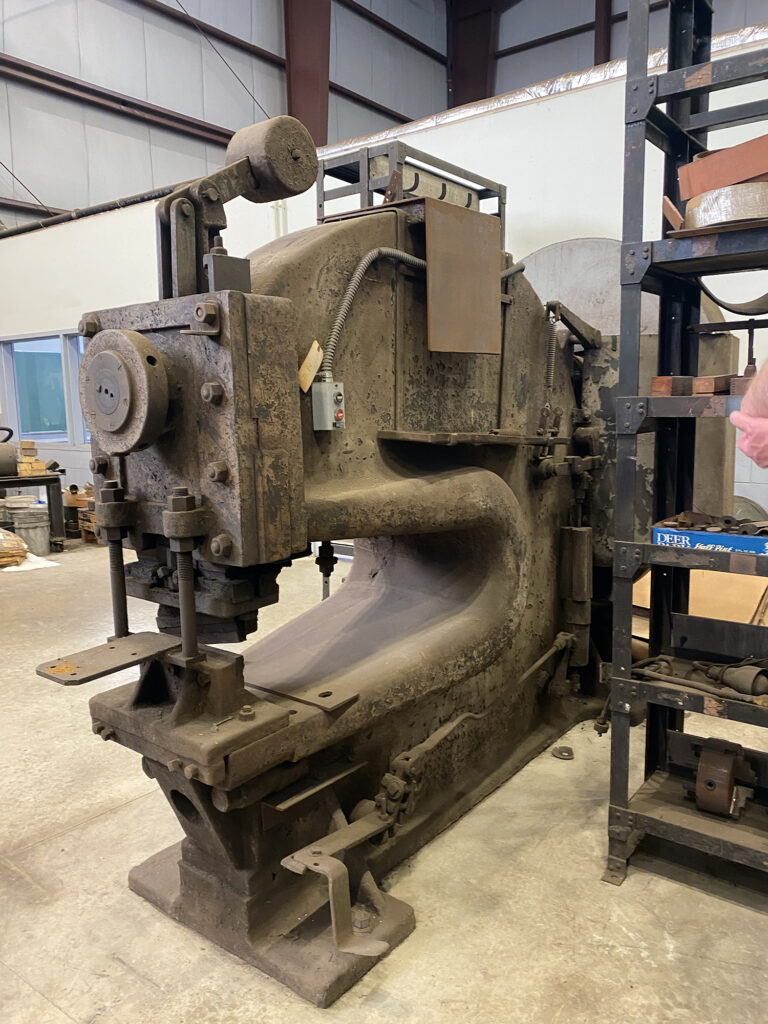
Ironworker
Ironworker is a general term used to describe a variety of metal-forming machines used for bending, notching, shearing, and punching holes into plates of metal. The capability of an ironworker depends on the amount of horsepower it can generate and the type of workstations that it has—for instance, only an ironworker with a specific shearing station can shear metal. For this reason, an ironworker may instead be named after the operations it is capable of, rather than the term “ironworker.”
Today, these machines are typically divided into mechanically powered machines and hydraulically powered. A mechanical ironworker is better suited for light, fast, and noncontinuous work, while hydraulic ironworkers generate higher amounts of force at a slower speed. Hydraulics are better suited for continuous running, such as in a factory or mass manufacturing setting, or for work requiring high gauge metal.
The Museum’s ironworkers were donated by Harvey A Stambaugh & Sons Inc., a boiler repair company that was located on Key Highway in the Inner Harbor, specializing in antique boiler repair. This company previously helped the Museum with some of our locomotive boilers and donated some of their machinery to the museum when the shop closed down.
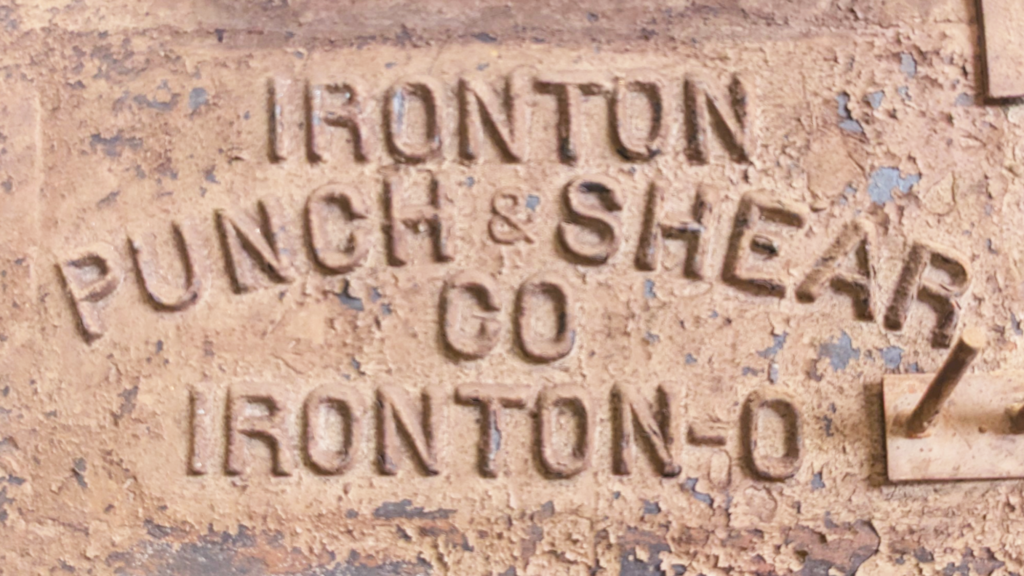
Ironton Punch and Shear
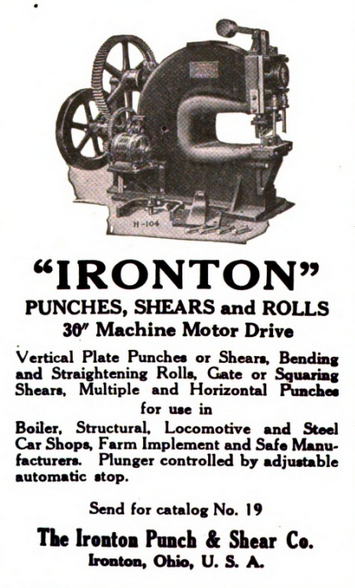
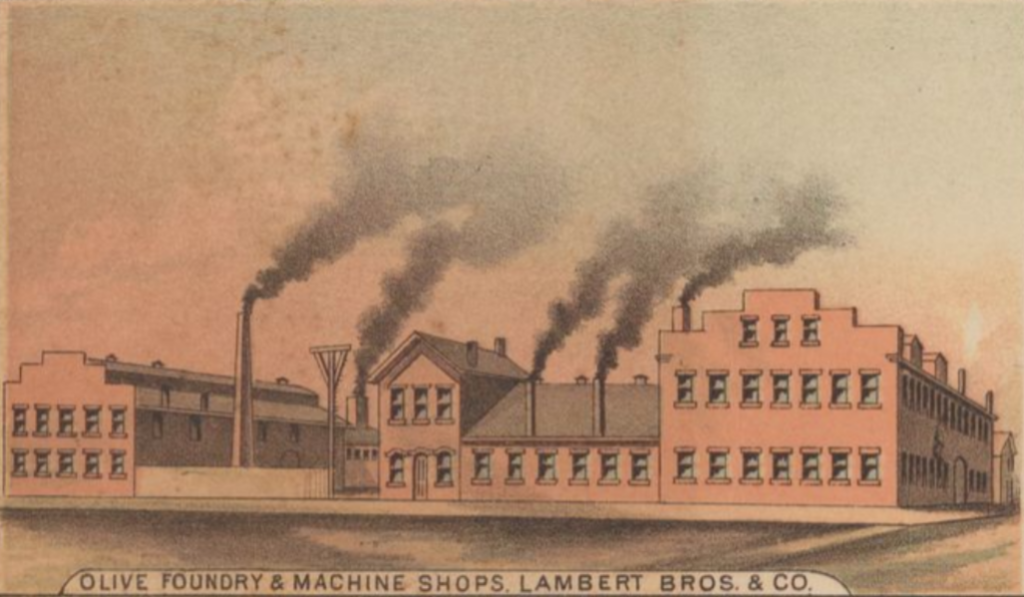
Ironton Punch and Shear was based in Ironton, Ohio, succeeding two earlier companies: Olive Foundry and Machine Co. and Cincinnati Punch and Shear. The town of Ironton was founded in 1849 on an economy of exported coal and pig iron. In 1911, the town awarded contracts to expand this area of business, resulting in the consolidation of the previous two companies into Ironton Punch and Shear, complete with the funding to construct an entirely new factory stocked with new, electrically powered machines.
Ironton Punch and Shear made metal-forming machines primarily for bridge builders, boiler, railroad, and automobile shops, which could easily be shipped down the Ohio River or on the Ironton Railroad. The company likely went out of business in the 1920’s — after the end of WWI, the demand for iron dramatically decreased, and many iron mines in the US were finally depleted of their resources around this time. The last iron furnace in the area was shut down by 1930, and the economy of Ironton moved on to other industries.
Did you know?
Andrew Jackson, in 1833, rode on the B&O Railroad, becoming the first US president to ride a train.
“This was such an awesome experience! The trains inside were phenomenal and all very well kept. But we went ahead and did the train ride also and that was just icing on the cake! This is a great experience for kids, teens, and adults like myself.”
Kristina R.

Sign Up for Train Mail