
Quick Facts
| Manufacture Date | Early 1900s / Bridgeport, Connecticut |
|---|---|
| Manufacturer | Bullard Machine Tool Company |
Description
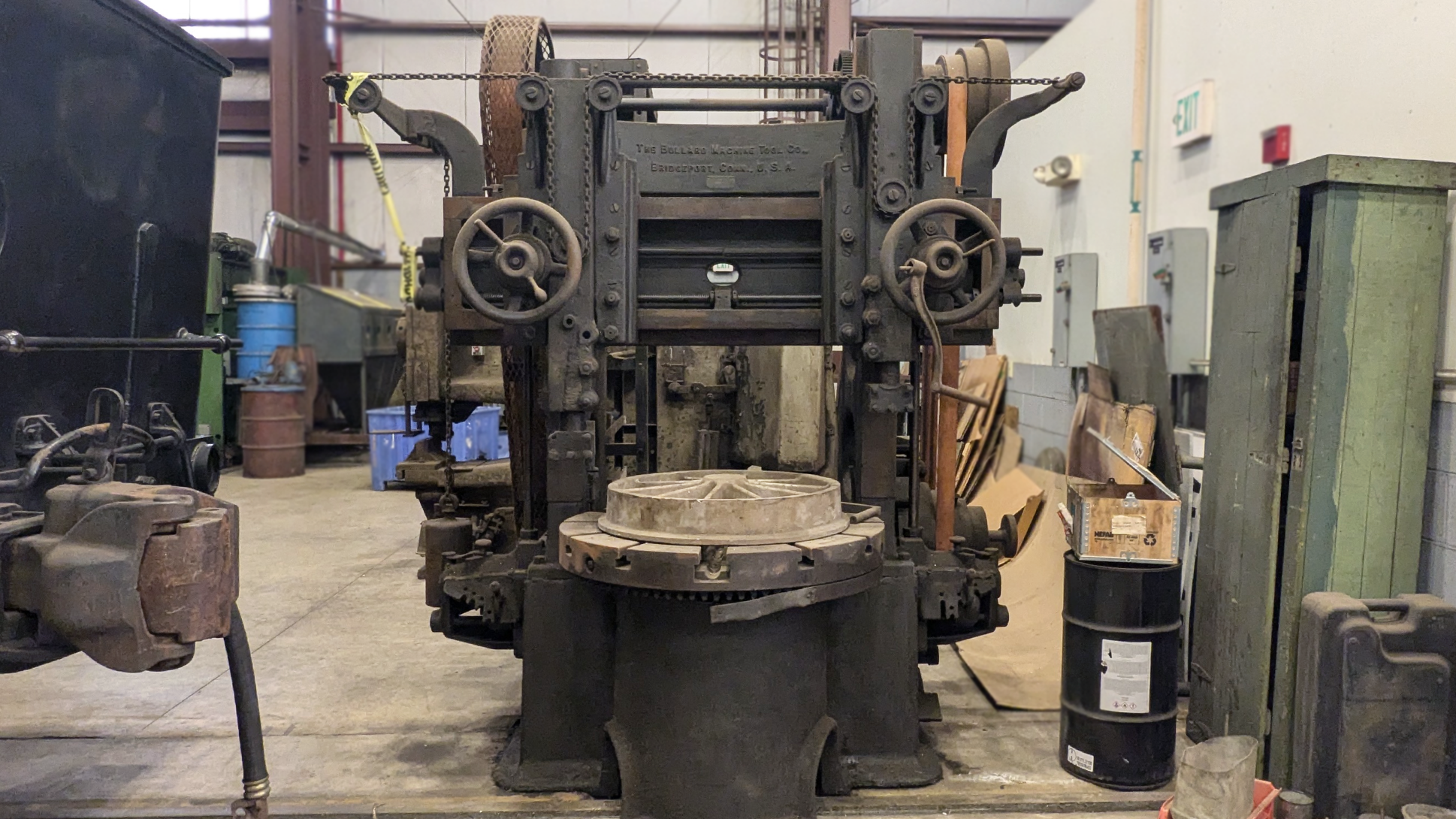
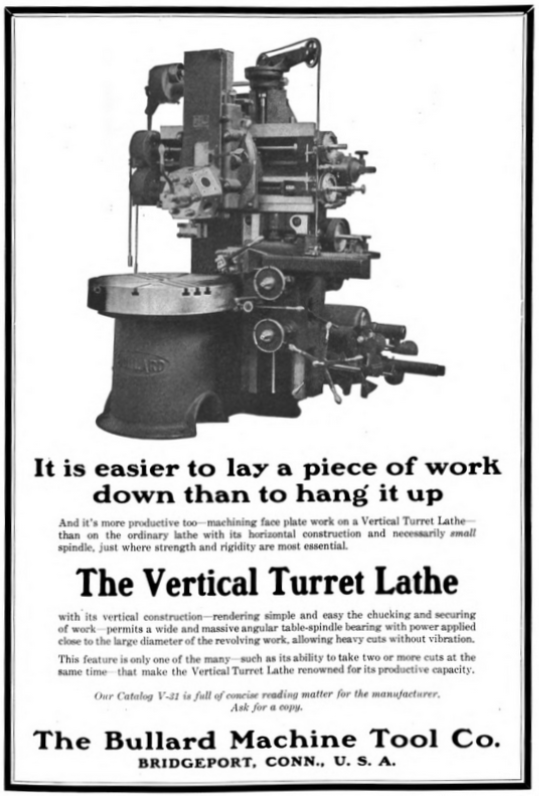
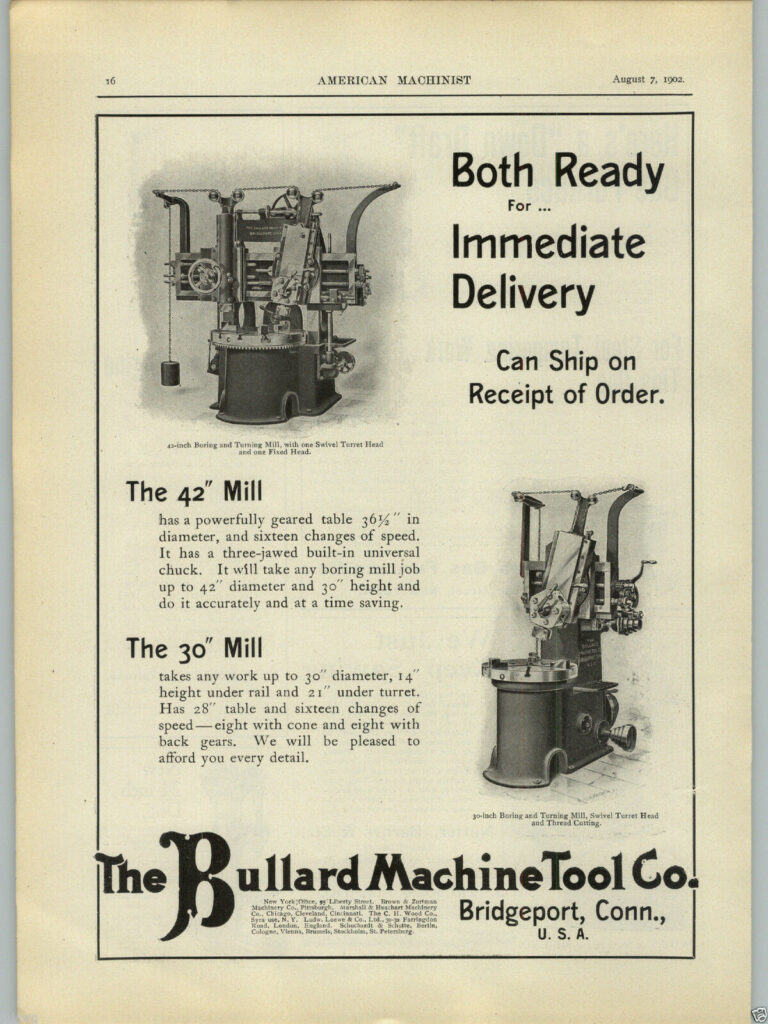
Vertical boring mills work similarly to a lathe, with a workpiece that rotates against a stationary cutting blade. The difference is that a lathe is oriented horizontally with the workpiece held similarly to an axle in a car, whereas in a vertical mill this orientation is flipped. The workpiece is secured onto a large table that rotates while the cutting blade sits above it. This makes vertical boring mills better suited than lathes for heavy and oversized pieces, as there is less of a struggle against gravity and size constraints. In a railroad workshop, a lathe may be used to create the threading on a bolt, while a vertical boring mill would be used to mill grooves into a locomotive wheel.
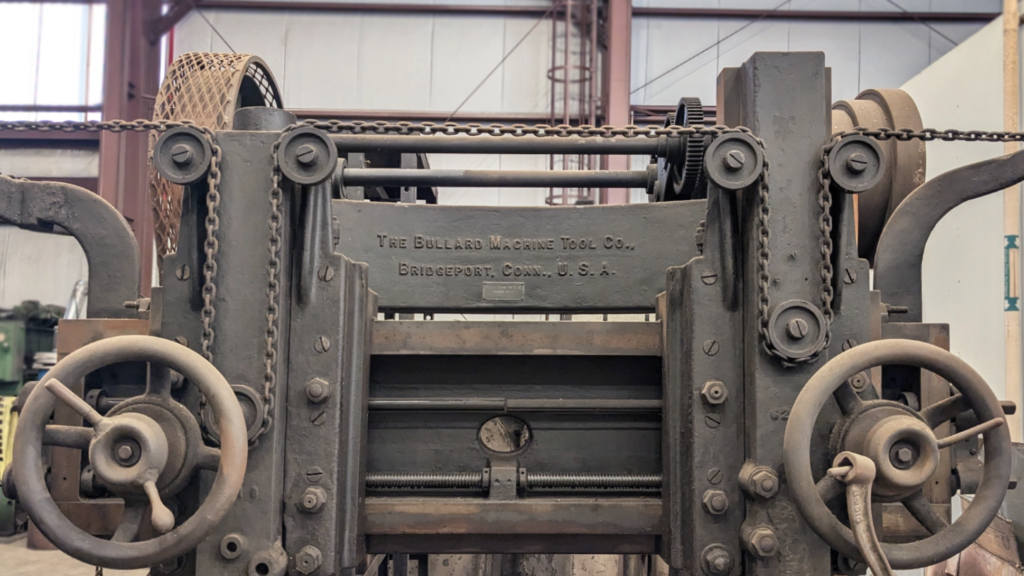
Bullard Machine Tool Company
Bullard Machine Tool Company was a massive American tool manufacturer that started in 1865 in Hartford, Connecticut by Edward Bullard, producing vertical drill presses and pumps. The business moved around and changed names for the next few decades—notably, in 1875 the company had moved to New York City, where it dealt in new and secondhand machinery. Bullard eventually decided to return to Connecticut in Bridgeport, temporarily renaming the company to Bridgeport Machine Tool Works (not to be confused with Bridgeport Milling Machines, which would become established in the 1930’s) and handing over the New York business to one of his employees, J.J. McCabe. Once in Bridgeport, Bullard began specializing in lathes and vertical boring mills. These machines were popular in railroad shops for creating new wheels.
Vertical Boring Mills in the Workshop
This machine came from a shipyard here in Baltimore. The current patent owner for Bullard machines is Bourn & Koch, who still makes parts and repairs for these machines upon request.
Here, we use the Bullard to machine the grooves into a wheel cast here in the workshop. A tool like this is useful for creating small refinements in a piece, usually as the final or penultimate step. After these refinements, the wheel is moved to the wheel press to be assembled onto an axle.
Did you know?
Andrew Jackson, in 1833, rode on the B&O Railroad, becoming the first US president to ride a train.
“The National Museum of Railroad History & Innovation is easily one of the best railroad museums in the country, if not the world.”
Geoffrey Morrison

Sign Up for Train Mail